Deserted Island Music
Deserted Island Music home page
my Amazon reviews, mostly about books, movies and music
More Good Reading
One man is trying to buy all the LPs in the world
As far as I'm concerned, if the music was good enough, it's made its way to CD. At least in America.
I wish him well, and recognize he's performing some kind of public service.
I'm just glad he's the one with the obsession, not me.
Speaking of LPs, here's a little history of its beginnings.
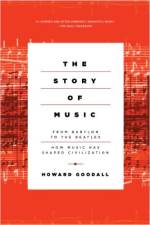
The Story of Music: From Babylon to the Beatles: How Music Has Shaped Civilization, by Howard Goodall (2014).
Probably best just to go to the Amazon reviews.
Essentially a "Music Appreciation" course, but far better than either of the two I took.
A 6-episode TV series on YouTube is a perfect aid to the book. (Caution: don't give up after the first episode, on earliest music. Once we reach about the year 1650, music starts getting really good.)
The Fit That Led to a Country Hit for Merle Haggard
By Marc Myers, January 23, 2014, Wall Street Journal (which I hope will forgive me reprinting this terrific article that is probably behind a paywall)
Anatomy of a song: How 'Big City' was written and recorded in a matter of hours.
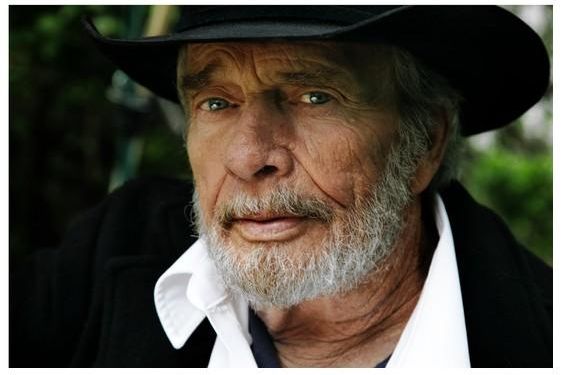
Merle Haggard Myriam Santos
Merle Haggard knows all about hard living, uncertain love and workers ground down by depressing jobs. As one of country music's greatest living singer-songwriters, Mr. Haggard in the 1960s was an architect of the Bakersfield sound—an earthy, California-born style that was more firmly rooted in country's traditions than the polished productions recorded in Nashville at the time.
Mr. Haggard—who will perform Sunday at the Grammy Awards—grew up in Bakersfield but soon ran afoul of the law in the 1950s, landing in prison after trying to rob a roadhouse. As an inmate at San Quentin, he was in the audience in 1958 when Johnny Cash performed there, convincing Mr. Haggard to take his talents more seriously when he was released in 1960. Hits followed in the 1960s and '70s that often pined for traditional values ("Okie from Muskogee") but sometimes came with a populist twist.
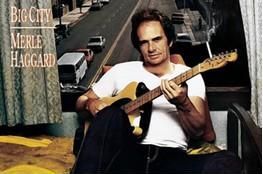
In January 1982, the singer released "Big City"—a song that tapped into blue-collar frustration with urban assembly lines. "Been working every day since I was 20 / Haven't got a thing to show for anything I've done." The single reached the top of Billboard's country chart—and became his 28th No. 1 single. Mr. Haggard, 76, talked about "Big City's" inspiration, how it was recorded and his little-known co-writer. Edited from an interview:
Merle Haggard: In July 1981, when my tour bus pulled into the driveway of Tom Jones's Britannia Studios in Los Angeles, we knew we had a rough two days ahead of us. I had just signed with Epic Records, and they wanted me and my band [the Strangers] to record 23 songs in 48 hours—giving them enough material for two albums. When we finally finished on the second day, I went out to the bus to check on Dean Holloway, our driver and my lifelong friend. For whatever reason, my timing was perfect: Dean was ticked off.
Dean and I had known each other since grammar school in Bakersfield, where my parents had moved from Oklahoma during the Depression. Dean and I met when we were 13 years old at a little theater where Roy Rogers and Gene Autry used to perform. Naturally, the first thing we did was fight. Once we got up off the ground, we became best friends and were inseparable.
 Growing
up in the farmlands of California, Dean was the best driver I ever rode
with. When we were teens, there was never a question about who was going
to drive. He drove and I played guitar and that's the way it was. So in
'66, when my career took off and I started touring longer distances, I
asked Dean to drive the bus, and he did.
Growing
up in the farmlands of California, Dean was the best driver I ever rode
with. When we were teens, there was never a question about who was going
to drive. He drove and I played guitar and that's the way it was. So in
'66, when my career took off and I started touring longer distances, I
asked Dean to drive the bus, and he did.
From then on—until the '90s, when he retired—Dean drove our bus. He had amazing instincts and reflexes. I remember coming out of Nashville one time in '66. We were in an old Flxible going at a good clip on a two-lane road with no shoulders when we came over a rise. In front of us were two cars just sitting there—one behind the other. They were waiting for a wide truck to pass coming from the other direction.
I was sitting behind Dean rehearsing "Swinging Doors" and saw what lay ahead. I thought, "Wonder what old Dean's gonna do now." There wasn't time to stop without crashing into those cars. So Dean sailed to the right of them. As we passed within inches of the first car, I could see two little girls in the back through their rear window. The bus leaned terribly to the right as we flew past and Dean managed to put that bus gently on its side in the grass. Dean saved those little girls, no one on our bus got hurt and there wasn't even a scratch on the bus once the tow truck set it straight.
Getting back in Los Angeles in '81, when I headed out to check on Dean, he wasn't happy. Buses then didn't have much air conditioning, and ours had been sitting in the heat for hours with the engine off. Dean was sitting there minding the bus when I asked how he was doing, Dean said, "I hate this place. I'm tired of this dirty old city."
As a songwriter, I instinctively listen and watch for interesting ways people put things at bars diners and on billboards. "This dirty old city" sort of caught me. I said, "Mr. Holloway"—that's what I always called him—"I can see you're upset but why don't we take that anger out on a piece of paper." I climbed on board, and Dean handed me a pad and pen that he had with all the other things he kept near his seat.
Whenever I work on lyrics, I hear the music as I write the words. The two go together for me. On the bus, the lyrics came real good and their feel sort of dictated the melody. I took Dean's "dirty old city" line and began to build a story. The feeling resonated because it was a time in America when things were breaking down, especially in cities. I thought about Detroit and the problems the car industry faced after the gas shortage of '79. I imagined a family leaving Detroit and happy to be getting out.
I mixed in some lines about quitting a job so there was a reason to leave the dirty old city. But for the chorus, I needed a place where the person in the song wanted to go. I said to Dean, "You're in the middle of Los Angeles now. Where would you rather be?" Dean said, "If it were up to me, it'd be somewhere in the middle of damn Montana." Well, with Dean on a roll, we had that song done in about 10 minutes.
When we finished, I moved a bunch of lines around so they'd sing right, tore the sheet out of the pad and told Dean, "I'm gonna run inside and record this thing before I forget the melody." Inside, the band was packing up. I said, "Hold on, let's do one more. I just wrote something and want to get it down." The band shrugged and said, "All right, if that's what you want to do." I ran down the song's melody and words for the band and told them the feel I wanted. I gave them the chords and told them where I wanted the others to join me on the vocal.
Before we started, I told Jimmy Belkin, my fiddle player who had spent many years with Bob Wills and Ray Price, to give me a good, strong intro. He hadn't rehearsed anything—what you hear is what he played after I hummed the melody. Then Norm Hamlet came in with his steel guitar. I didn't play any guitar on this one— Roy Nichols did. I just sang. We didn't have an ending but the band came up with one they thought I'd like and ran me off as we wound down.
While all this was going on, producer Lewis Talley had gone off for a jug, thinking the session was over. When he returned to the control room, we were in the midst of recording "Big City." Lewis was my mentor and I could see that look on his face. He really liked the song. At the end, he hit the talkback switch and said, "Fix one bass note and you'll have a No. 1 record." We fixed it, and while I listened back to the tape, all I could think was, "Man, Dean-o just wrote a hit song."
The engineer ran off a 7½-inch tape reel of the song, and I took it out to the bus. I had a big 7½-inch player mounted in there, and I cued up the tape. I said to Dean, "I want you to hear something—this hasn't been written a full hour yet." I punched play and said, "Listen to our song, Mr. Holloway." Well, Dean's attitude went from the floor to the ceiling. I said, "You and I just wrote a hit." He was white around the mouth.
Dean said, "Damn," and he kept saying that as we listened. I said, "Yep, those words we wrote earlier are already a record. This was your inspiration so we're splitting it down the middle." Dean was a plain old boy and was never the same after that. He wasn't in my tax bracket—he was a regular guy making a regular salary and this thing transformed him.
I'm sorry to say Dean died in 2009. But a few years before he did, I had a chance to ask him how well he did with "Big City." Dean said, "Hell, that song made me a half-million dollars." I felt good about that. Dean was my best friend. For the rest of his life after that record came out, he talked to himself about what we had done.
-------------------
Solace of Solitary Encounters
with Classical Music, by John
Mauceri, Wall Street Journal, May 28, 2020
https://www.wsj.com/articles/the-solace-of-solitary-encounters-with-classical-music-11590681122
Nothing can replace
the experience of a live concert of classical
music. Yet magnificent as such
events are, distractions often come along with the experience: the
towering person in front of you
blocking your view, the crinkle of someone unwrapping a candy, the
dreaded cough at precisely
the wrong moment. This dreadful pandemic has given us an opportunity to
explore a different
kind of listening—something both intimate and global, akin to
meditation, in which you can sit
inside yourself for whatever amount of time you choose or can spare.
This sort of listening is the opposite of isolation. It is the antidote
for loneliness. It can remove
you from your physical environment, and you can be embraced by the
geniuses who seemed to
know everything about the human experience and wanted to tell you about
it.
And why did those great classical composers and
artists feel the impulse to share with you?
Because they knew that you would implicitly understand and be embraced
by a time-traveling,
death-defying art form that captures the communion of our species.
Classical music is a triumph of the world’s cultures, collected over
thousands of years from the
indigenous music of the first humans, carried on our trade routes by
commerce, religion, war and
our human curiosity. It took 35,000 years, from the Stone Age to the
mid-19th century, to
achieve the modern flute. Gold and bronze trumpets have been found in
the tombs of the
pharaohs.
The core composers of the classical canon all lived in times of crises,
personal and political.
The core composers of the classical canon all lived in times of crises,
personal and political, in
which wars raged, bombs could be heard down the street, unexplained and
untreatable illnesses
were common, and the deaths of children, parents and loved ones were
everyday occurrences.
Beethoven lived alone in Vienna as Napoleon’s troops invaded, all the
while knowing that each
day would bring him closer to total deafness—and he wrote music. Every
Beethoven symphony,
no matter how circuitous the journey, ends in the uplift of a major
chord. Are you still feeling
sorry for yourself?
With the outbreak of World War I, the 39-year-old Maurice Ravel was too
short and light to join
the French army. Instead, he tended to the wounded and learned to drive,
spending much of the
war with his truck delivering supplies under incredibly dangerous
conditions. He developed a
heart condition, contracted dysentery, had to be operated on for a
hernia and developed
insomnia, from which he suffered until his death in 1937.
And yet all the while he composed music. Twenty million people had died
and another 21
million were left wounded in 1918, and after the fighting ceased, an
influenza pandemic wiped
out some 20 to 50 million more. Listen to Ravel—not just to how pretty
and sly his eroticism is
but to the steel in his veins, before and after his war experience.
Do you have five minutes for yourself? Put on your earphones and find
any movement of any
symphony by Mozart.
Many of us might never have considered setting aside time for ourselves
to turn or return to the
uniqueness of this music. Yet because of technology, that opportunity is
easily accessible to most
of us now. Do you have five minutes for yourself? Put on your earphones,
go to YouTube and
find any movement of any symphony by Mozart. Close your eyes. Do it
every morning before
you start your chores.
Or give yourself the daily gift of Beethoven’s piano sonatas at 4 p.m.
It will take 32 days to hear
them all, allotting about 20 minutes each day, and you will have created
a concert series
otherwise impossible in the “real world.”
This is Beethoven’s 250th birthday year. Let him celebrate
your life with
his. His sonatas trace
the life of a man who pounded his musical fist on the table to demand
freedom for all people
even as he demonstrated humility and
acceptance, the existence of beauty in the midst of
devastation, and the mystery of life and impending death—in other words,
everything we need
right now. As Leonard Bernstein once said, “Beethoven never lets you
down.” Let classical
music raise you up.
— Mr. Mauceri is the founding director
of the Hollywood Bowl Orchestra in Los Angeles and
the author, most recently, of “For the Love of Music: A Conductor’s
Guide to the Art of
Listening” (Knopf)
--------------------
Alma Deutscher (for lovers of classical music) (but not modern classical music)
Here's an article published in March 2020 in the Wall Street Journal. I'm including it without permission, hoping the Journal will overlook my petty crime. (Everyone: please subscribe to the Journal, as I do. It's the best newspaper in the country. Maybe the world.)
--------------------